How to Choose the Right Tungsten Carbide Plate for Your Needs?
Choosing the right Tungsten Carbide Plate requires careful consideration. This material is known for its hardness and durability. It is crucial in various industries, including mining, construction, and manufacturing.
Different applications demand specific properties from Tungsten Carbide Plates. For instance, some plates are designed for high wear resistance, while others focus on impact toughness. Understanding these needs can guide your choice.
You might wonder about the dimensions and coatings available. A thicker plate might provide more durability but could be less flexible. Evaluate your requirements thoroughly. A misstep here can lead to increased costs or decreased efficiency. Finding the ideal Tungsten Carbide Plate is not just about selecting a size, but also considering your unique needs.
Understanding Tungsten Carbide Plates and Their Applications
Tungsten carbide plates are crucial in various industries. These plates are known for their durability and hardness. They can withstand extreme conditions. Their applications span across mining, manufacturing, and even medical fields. Many users find it difficult to select the right plate for their specific needs. It’s important to understand the characteristics of different types.
Each tungsten carbide plate has distinct properties. Some are designed for high heat resistance, while others excel in wear resistance. This means that the choice may depend on the application. For instance, a plate used in machining might need different features compared to one used in construction. Users often overlook this detail, leading to inefficient choices.
While tungsten carbide is robust, it’s not infallible. Users must consider the environment where the plates will be used. Corrosion and chemical exposure can be detrimental. It's also crucial to factor in cost versus longevity. Often, investing more upfront leads to better long-term results. Balancing quality and price can be tricky yet vital.
Comparison of Tungsten Carbide Plate Applications
Key Factors to Consider When Selecting a Tungsten Carbide Plate
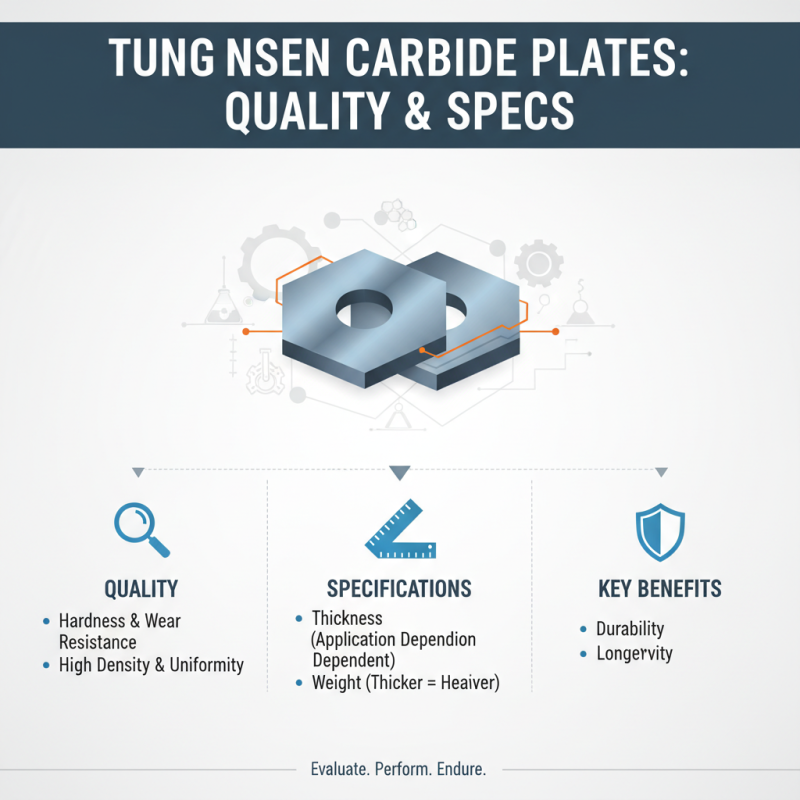
When selecting a tungsten carbide plate, consider several key factors. The thickness of the plate is crucial. Thicker plates tend to offer better durability and wear resistance, but they can be heavier and harder to handle. Think about the application. Some tasks require strength, while others might need flexibility.
Material grade is also important. Different grades impact hardness and wear resistance. For instance, high-grade tungsten carbide can endure extreme conditions. Evaluate your specific needs before making a decision.
Tips: Always assess your environment. High temperatures or corrosive substances can affect performance.
Another factor is the size of the plate. Ensure it matches your equipment and workflow. A poorly sized plate can lead to inefficiencies.
When choosing, visualize your optimal use case. Imagine how the plate will behave under stress. This mental exercise can highlight potential shortcomings in your selection.
Types of Tungsten Carbide Plates and Their Specific Uses
Tungsten carbide plates come in various types, each designed for specific applications. For instance, standard tungsten carbide plates provide excellent wear resistance. They are ideal for industrial applications, such as mining and heavy machinery. These plates can withstand extreme conditions, yet they may not be suitable for all environments.
Another type is the tungsten carbide ceramic composite. This type offers enhanced durability and is often used in tooling and machining. It combines the hardness of tungsten carbide with the resilience of ceramics. However, they can be more brittle and might not perform well under sudden impacts. Consider your project needs carefully.
Lastly, there are custom tungsten carbide plates. These can be tailored to fit unique specifications, making them versatile. However, customization may lead to higher costs and longer production times. Analyze your requirements thoroughly. The right choice will lead to better performance.
How to Choose the Right Tungsten Carbide Plate for Your Needs? - Types of Tungsten Carbide Plates and Their Specific Uses
| Type of Tungsten Carbide Plate |
Hardness (HV) |
Common Uses |
Advantages |
| Standard Tungsten Carbide Plate |
1600-2000 |
Machining tools, wear plates |
High hardness, good wear resistance |
| Metal Matrix Composite Plate |
1800-2200 |
Heavy-duty applications, mining tools |
Enhanced toughness and impact resistance |
| Finishing Tungsten Carbide Plate |
1400-1800 |
Precision components, molds |
Excellent surface finish, dimensional accuracy |
| Coated Tungsten Carbide Plate |
1600-2100 |
Cutting tools, tooling inserts |
Improved lubricity and reduced friction |
| High-Temperature Tungsten Carbide Plate |
1700-2300 |
Aerospace and automotive applications |
Superior thermal stability, reduced thermal expansion |
Common Mistakes to Avoid When Choosing Tungsten Carbide Plates
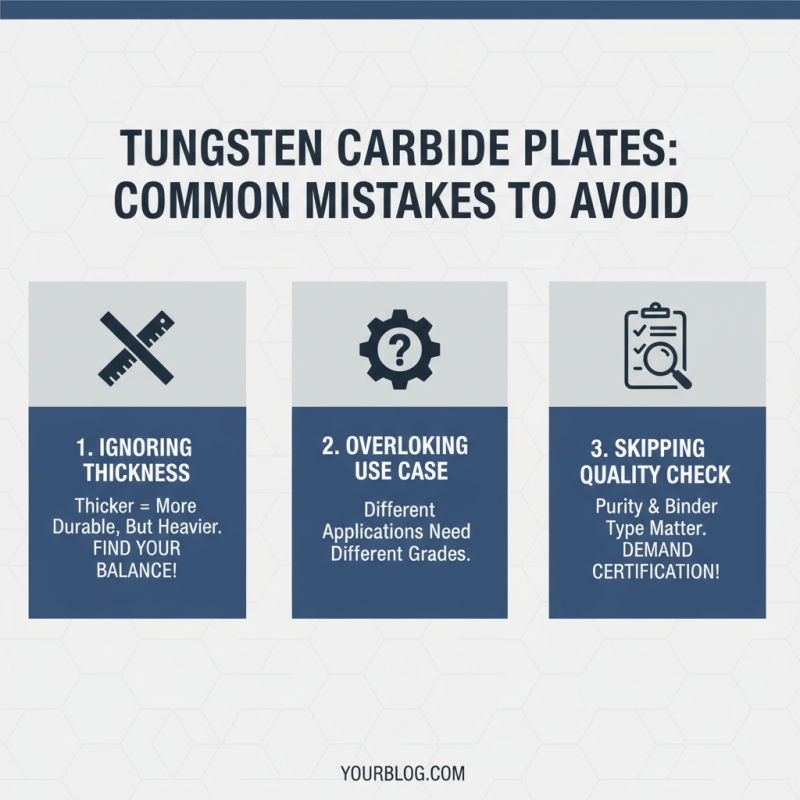
Choosing the right tungsten carbide plate can be tricky. Many users overlook essential factors. One common mistake is not considering the thickness of the plate. Thicker plates have greater durability. However, they can be heavier and harder to handle. Balance is key.
Another mistake is ignoring the specific application. Different industries may require different properties. For example, some applications need high wear resistance, while others prioritize heat resistance. Using the wrong plate can lead to premature wear and costly downtime. Research is crucial, yet many skip this step.
People often underestimate the importance of proper installation. Even a high-quality plate can fail if not installed right. Improper alignment can lead to uneven wear. Additionally, users may forget to regularly check for signs of damage. Routine maintenance should not be an afterthought.